Help protect the ecological and cultural integrity & diversity of Newfoundland’s South Coast Fjords region
Parks Canada, the Government of Newfoundland and Labrador, Miawpukek First Nation, Qalipu First Nation, and the Town of Burgeo are working in partnership to assess the feasibility of establishing a National Marine Conservation Area (NMCA) on the south coast of Newfoundland.
What is The South Coast Fjords Study Area?
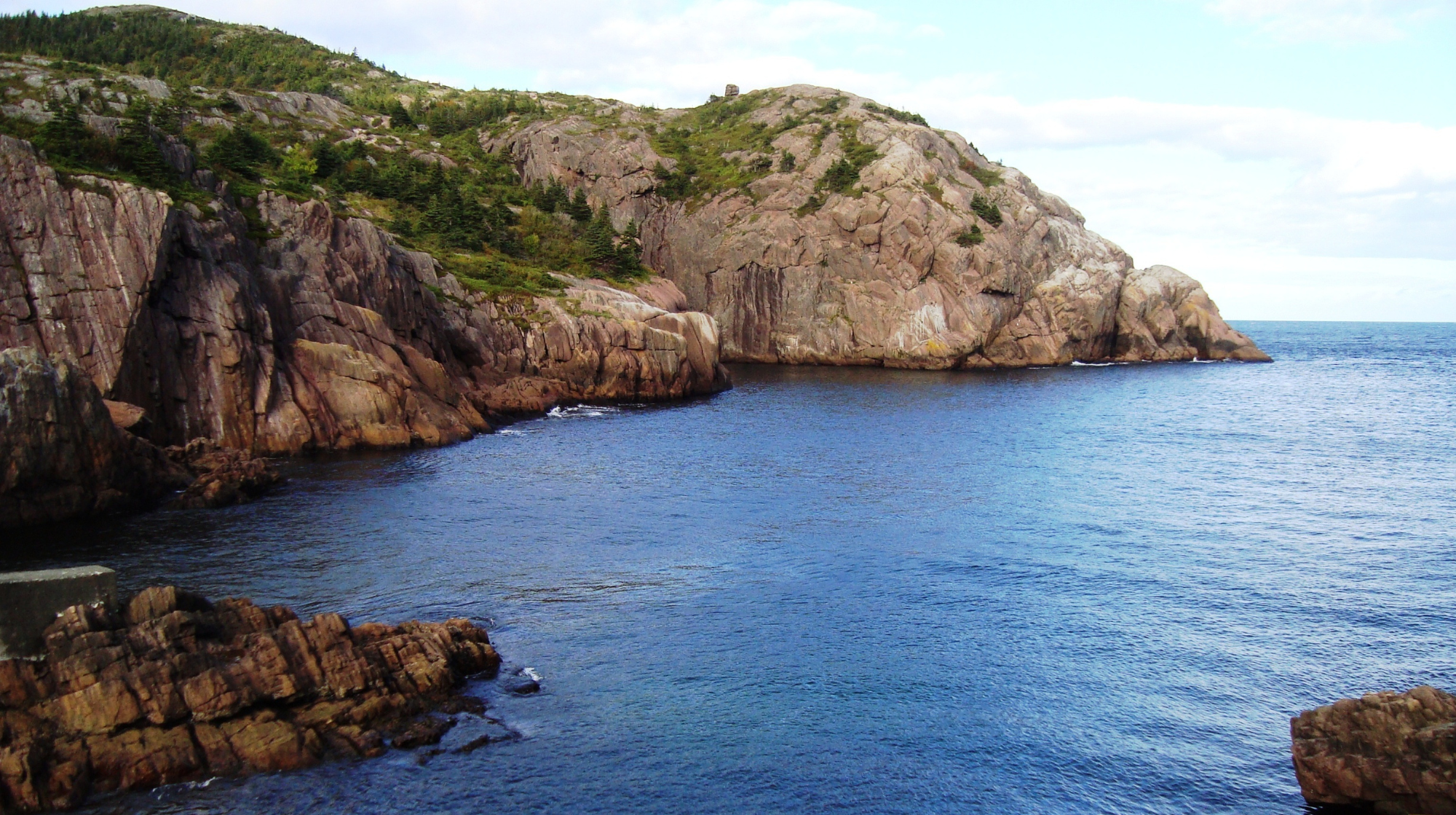
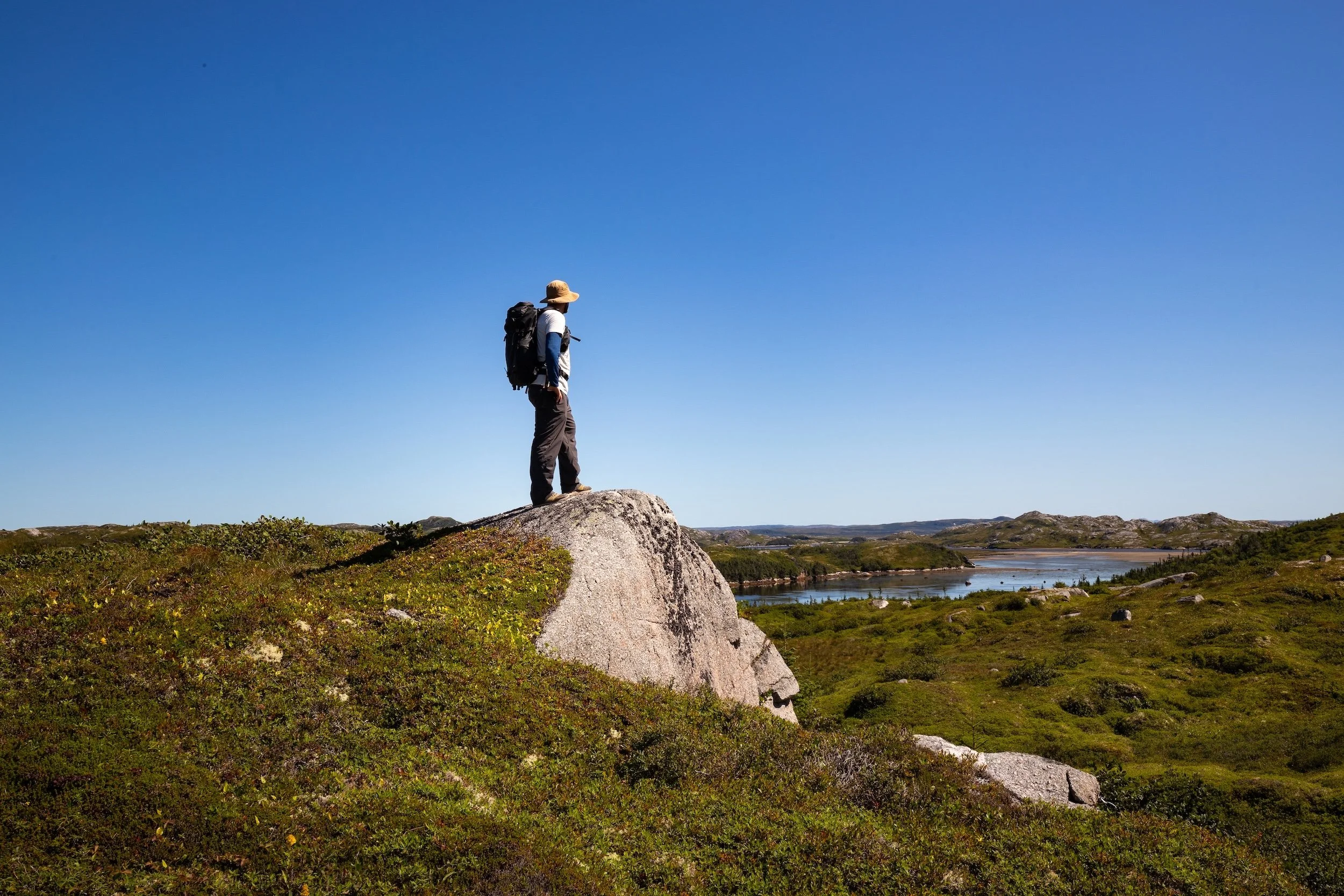
The South Coast Fjords Study Area is a place known for its tall rocky cliffs, deep fjords made by glaciers, sandy dunes, and white beaches. The ocean here is full of life — with healthy waters, estuaries, and marshes that help many animals live and grow.
These waters are an important home and travel path for more than 20 species of whales and dolphins. You can also find porpoises, turtles, sharks, fish, and seabirds here — including some animals that are rare or at risk of disappearing.
What’s the goal of this NMCA?
The goal of the South Coast Fjords National Marine Conservation Area (NMCA) is to help people from Canada and around the world explore and enjoy the Area’s rich ocean history and culture. It will share the stories and traditions of the Towns of Burgeo and Ramea, as well as other nearby coastal communities, and First Nations peoples.
There are also plans to look at turning Sandbanks Provincial Park into a national park. The Sandbanks study Area is 2.26 square kilometres.
Both the South Coast Fjords and Sandbanks Areas have many important archaeological sites that show how people have lived here for thousands of years — including the Maritime Archaic, Dorset, Pre-Inuit, Indigenous, and European cultures.
Protecting nature and culture
Parks Canada helps take care of important natural and cultural places in our country. They work to protect these special Areas so people can visit, learn, and enjoy them today and in the future. By doing this, Parks Canada also helps local communities share their stories and welcome visitors.
Everyone involved wants to keep the South Coast Fjords region healthy and strong — both its nature and its culture. Protecting this Area will help many kinds of plants and animals survive, and it will also help fight the effects of climate change. It will support the traditions and well-being of coastal and First Nations communities who have cared for these lands and waters for a very long time.
BY THE NUMBERS PARKS CANADA IN 2023–24:
23.7 MILLION
VISITORS
across Canada

$ 584 MILLION
TAX REVENUE
for all levels of government

Visitor spending supported
40,264 JOBS
across Canada
$4.5 BILLION
spent in local communities on
TOURISM, LODGING, MEALS
LOCAL AND REGIONAL IMPACTS OF SITES FEATURING PROMINENT MARINE ECOSYSTEMS
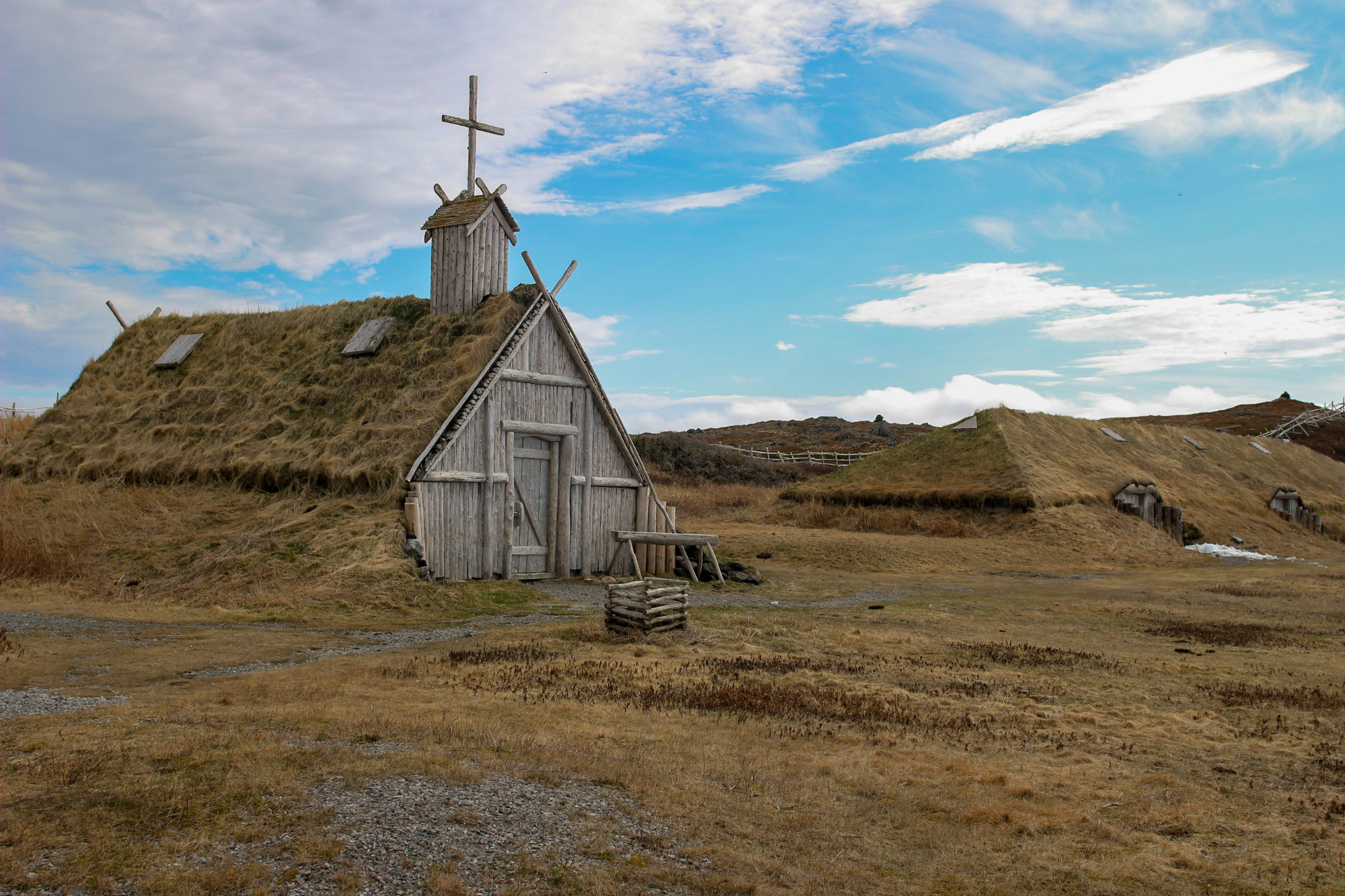
L’Anse aux Meadows
National Historic Site (NL) 2023-24:
31,995 visitors
$3.4M visitor spending
$1.6M to NL’s GDP
19 full-time jobs within NL
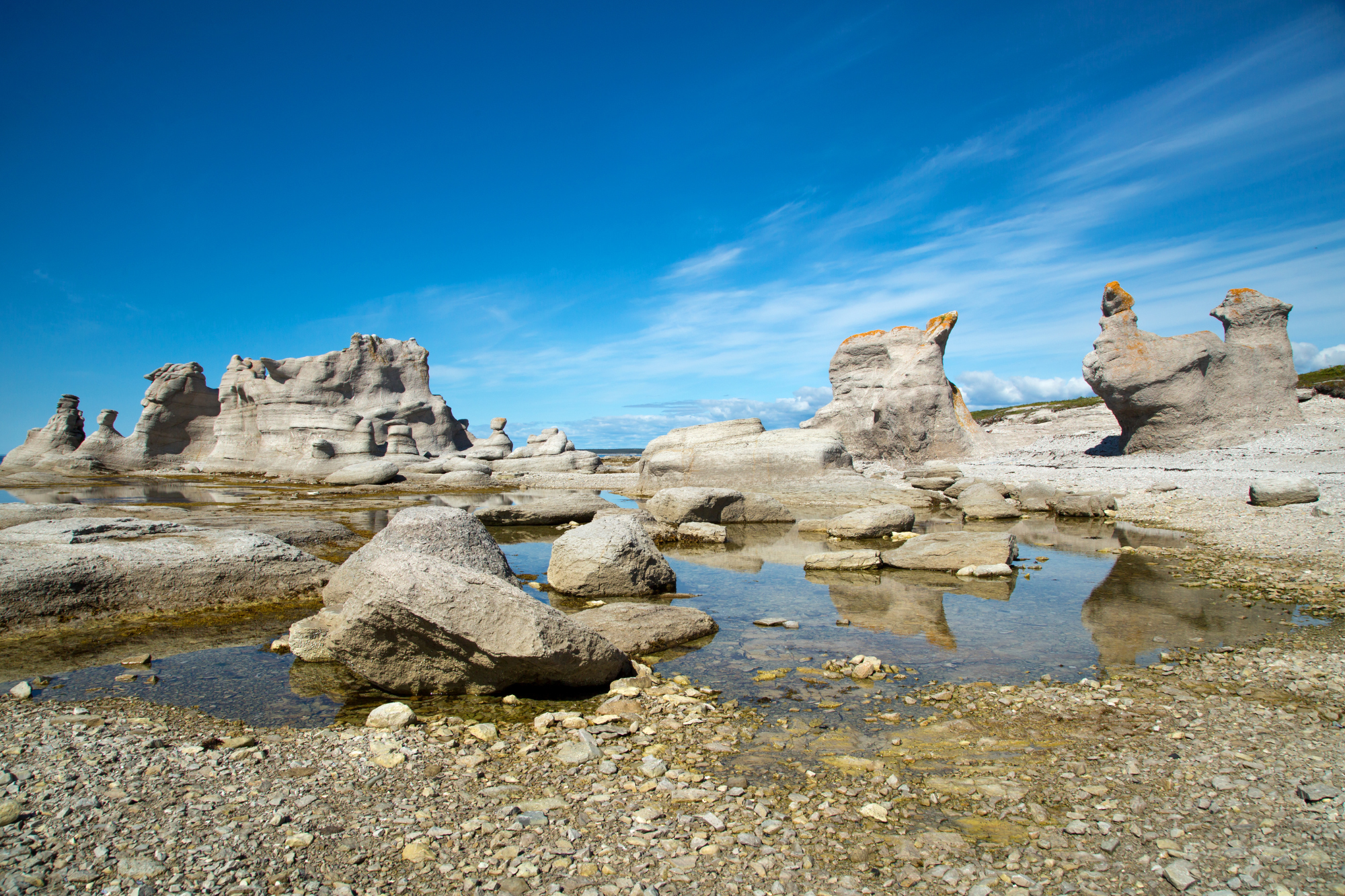
Mingan Archipelago
National Park Reserve (QC) 2023-24:
44,017 visitors
$4.6M visitor spending
$2.7M to QC’s GDP
31 full-time jobs within QC
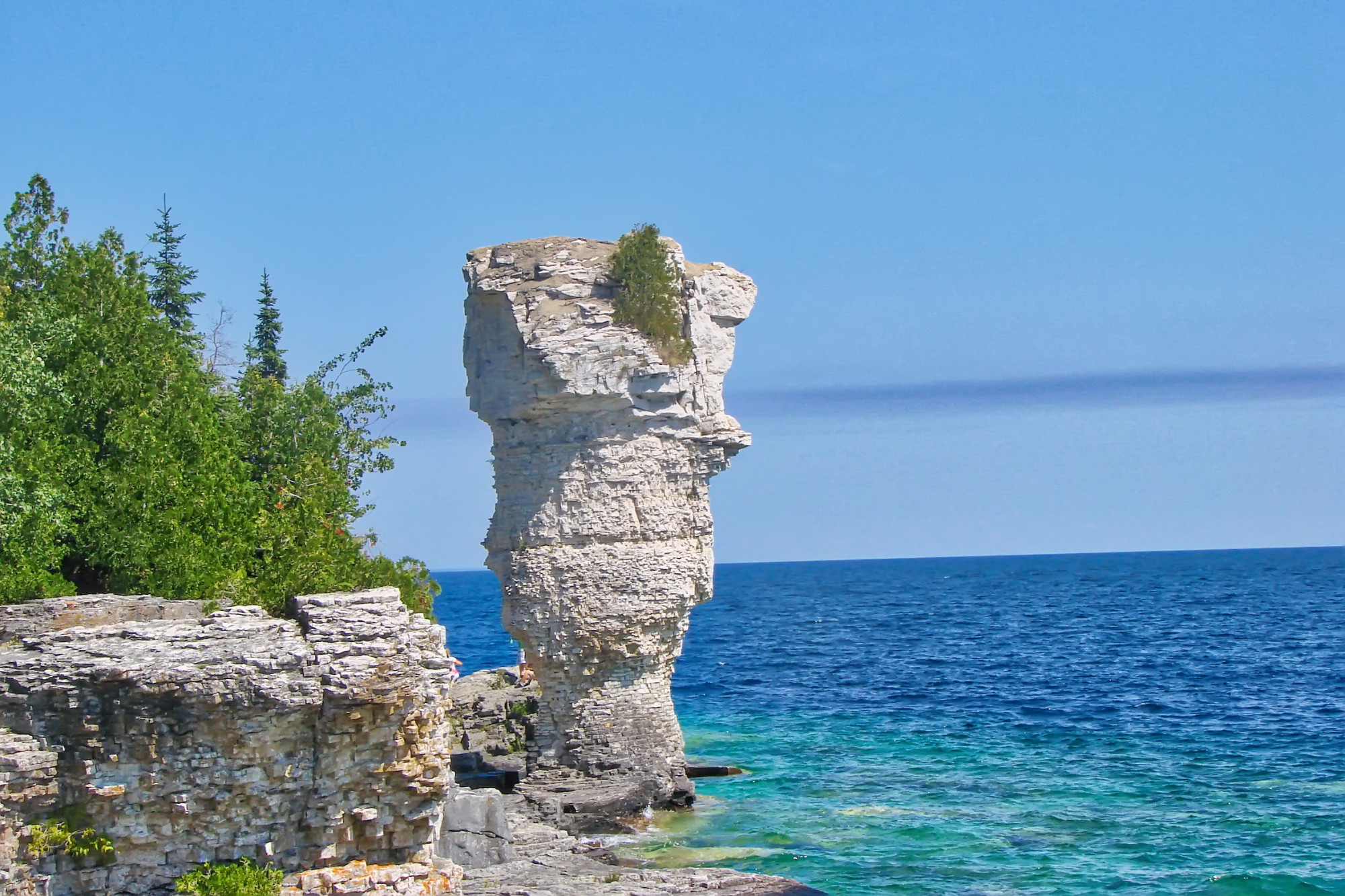
National Marine Conservation Areas (NMCAs)
Fathom Five
Marine Park (ON) 2023-24:
236,593 visitors

Sagueney-St. Lawrence
Marine Park (QC) 2023-24:
1,135,105 visitors

Protecting this special place is about more than conservation — it’s about caring for the ocean and wildlife that sustain us and helping our communities face the changes ahead. It’s also about honouring the coastal and Indigenous peoples who have always been its caretakers, and ensuring their knowledge and traditions continue to guide us into the future.
What is an NMCA?
A National Marine Conservation Area (NMCA) is a special part of the ocean that is protected and cared for by Parks Canada and its partners. These Areas help keep important ocean life, habitats, and cultural stories safe for the future.
The rules for NMCAs come from the Canada National Marine Conservation Areas Act, which says that NMCAs should:
Protect ocean plants, animals, and habitats so nature can stay healthy
Take care of cultural and historical sites
Allow people to use the ocean in ways that don’t harm the environment
Support Indigenous leadership in caring for the ocean
Help Indigenous and coastal communities stay strong and healthy
Give visitors a chance to explore and learn about the Area
Teach people about the value of NMCAs
Work together with partners to make good decisions
Some activities are not allowed in NMCAs. For example, oil, gas, and mining are banned. Bottom trawling (a type of fishing that drags heavy nets on the seafloor) and pollution at sea are also not allowed.
However, traditional use — such as fishing, hunting, or gathering in culturally important ways — continues in NMCAs.
Benefits of a National Marine Conservation Area (NMCA)
An NMCA helps protect the ocean while creating real opportunities for our communities.
Here’s how it makes a difference — for nature, culture, the economy, and people.
NATURE & ENVIRONMENT
Protects marine life and the places they live.
Keeps our ocean healthy and balanced.
Helps keep our water clean and our food safe.
Reduces the effects of climate change and helps us adapt.
Protects Areas that store carbon and fight global warming.
Shields our coastlines from erosion and extreme weather.
CULTURE & HERITAGE
Protects special cultural and historic places.
Recognizes the deep ties between Indigenous and coastal peoples and the sea.
Encourages Indigenous leadership and knowledge-sharing.
Helps pass down language, stories, and traditions.
Supports cultural pride, identity, and continuity.
ECONOMY & OPPORTUNITY
Builds a strong, sustainable ocean economy.
Supports responsible fishing and tourism.
Creates new business and job opportunities.
Attracts visitors, research, and investment.
Strengthens local infrastructure and community growth.
Encourages conservation-based industries.
COMMUNITY & PEOPLE
Offers meaningful experiences for residents and visitors.
Creates chances to learn, explore, and connect with nature.
Gives communities a say in how the Area is managed.
Builds teamwork and partnerships between local groups.
Raises awareness and appreciation for our ocean.
Supports traditional and local use through fair access.
“An NMCA is about protecting what we love — our waters, our way of life, and our future.”
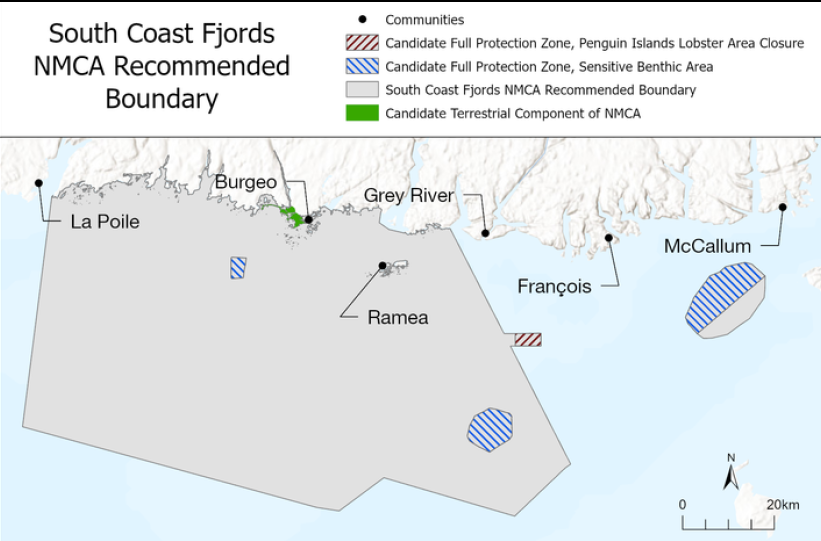
South Coast Fjords NMCA Recommended Full Protection Zones
The NMCA boundary remains subject to change based on information and feedback received during the feasibility assessment process.

FAQs
-
National Marine Conservation Areas (NMCAs) are designed to support both conservation and sustainable use. Sustainable commercial and recreational fishing can continue within designated zones of an NMCA.
Commercial fishing, other than bottom trawling, is permitted in specific areas, determined through a zoning process. These zones are established in collaboration with fishers, local communities, and Indigenous governments to ensure that existing sustainable fisheries, such as lobster and crab, can continue unless otherwise agreed upon through local consultation.
Commercial fishing and harvesting activities will remain regulated by Fisheries and Oceans Canada (DFO) under the Fisheries Act and in accordance with the NMCA’s management plan.
The NMCA boundary was designed to respect existing fishing activity and sites. In other words, current and planned fishing areas were considered during the boundary selection process.
There are two main types of zones within an NMCA:
Fully protected zones – No hunting, fishing, trapping, or harvesting is allowed.
Ecologically sustainable use zones – Fishing, hunting, trapping, and harvesting are permitted in a sustainable manner.
Fully protected zones will make up less than 5% of the total NMCA area.
-
Shellfish and seaweed farming — which have smaller environmental impacts and can benefit Indigenous partners and local communities — would be allowed in certain parts of an NMCA, as long as they follow DFO and provincial licensing rules.
However, the use of drugs and pesticides for finfish farming would not be allowed within an NMCA. To accommodate this, the NMCA boundary was specifically designed around existing and potential finfish aquaculture sites to ensure they remain outside the area.
-
National Marine Conservation Areas (NMCAs) help grow local economies in a way that also protects the environment. They create and support jobs in fishing, tourism, shipping, research, and conservation. In fact, building strong local economies is one of the main goals included in many NMCA management plans.
When a new NMCA is created, it often brings major federal investment that directly benefits nearby communities. For example:
The Tallurutiup Imanga NMCA in Nunavut received $54.8 million in funding between 2019 and 2026.
On British Columbia’s Central Coast, the federal government is investing $109.6 million over 11 years to develop a new NMCA.
These investments help create jobs, strengthen local businesses, and support industries that depend on healthy oceans.
NMCAs also diversify local economies by opening new opportunities for coastal and Indigenous communities — from sustainable fishing to tourism and ocean research. Across the country, Parks Canada sites like these generate billions of dollars each year and support tens of thousands of jobs, showing how conservation and economic growth can work hand in hand.
-
The idea for an NMCA on the Southwest Coast started with local leadership. The Towns in the region — led by Burgeo Town Council — first asked to be considered for an NMCA in 2003.
Since signing an agreement (MOU) in June 2023, Parks Canada has been leading the planning process to complete a feasibility study on the south coast fjords NMCA. This work includes strong input from local communities and Indigenous partners to make sure everyone’s voice is heard.
NMCAs are built on partnership and collaboration. They make sure local knowledge and Indigenous perspectives help guide every decision. Other NMCAs across Canada, like Gwaii Haanas and Saguenay–St. Lawrence, show how working together can bring both environmental and economic benefits. The South Coast NMCA has the same potential — to protect our waters while creating new opportunities for local growth and sustainability.
-
Yes! Studies and polling show strong public support for National Marine Conservation Areas (NMCAs), with no evidence that they reduce employment when local use continues.
Recent polling in 2025 shows overwhelming support for marine conservation in Newfoundland and Labrador. A March 2025 survey found that 86% of Newfoundlanders view marine conservation as essential to sustaining fisheries. Support is especially strong in the proposed NMCA region, with 90% of South Coast residents and 72% of Burin Peninsula residents in favour of the NMCA. Only 3–4% were opposed.
-
Parks Canada uses a four-level zoning system to guide what activities can take place within a National Marine Conservation Area (NMCA):
Full Protection Zones – areas fully protected from extractive use (no fishing or harvesting).
Sustainable Use Zones – areas where activities like fishing or aquaculture can continue in a responsible way.
Seasonal or Gear-Based Restrictions – areas with rules that vary by season or type of fishing gear.
General Use Areas – areas open to most traditional and ongoing marine activities.
Zoning is customized for each NMCA, based on local ecology and community input. It is not a one-size-fits-all approach.
NMCAs are designed to balance ocean protection with continued access. Zoning can be planned to accommodate vessel traffic, including boats used for fishing, recreation, and tourism. Existing ocean users are part of the planning process, and each NMCA is co-developed with local communities, Indigenous governments, and stakeholders.
For example, the Gwaii Haanas NMCA was co-designed with the Haida Nation and reflects local needs and priorities — showing that NMCAs are tailored, not imposed.
-
The National Marine Conservation Area (NMCA) is designed to keep our ocean healthy so that fisheries can continue to support local communities for years to come. By protecting key habitats and managing marine use responsibly, the NMCA helps fish populations stay strong and productive.
For today’s fishers, this means a more stable and sustainable resource base. For future generations, it means healthy oceans that can continue to provide food, jobs, and cultural connections.
The NMCA also encourages collaboration with fishers, Indigenous partners, and coastal communities to share knowledge and make sure traditional and commercial fishing can continue in ways that protect the marine environment. Together, we can ensure that fishing remains a proud and lasting part of our coastal way of life.
-
Aquaculture plays an important role in our coastal economy, and the NMCA aims to support that, not replace it. The planning process works closely with local operators, Indigenous partners, and communities to make sure existing aquaculture can continue and even grow in sustainable ways.
Shellfish and seaweed farming are great examples of aquaculture that fit naturally with the goals of an NMCA—providing local jobs while helping keep our waters clean and healthy. The focus is on partnership, innovation, and balance, so that both the environment and local industries can thrive together for the long term.
-
Communities play a key role in conserving and managing National Marine Conservation Areas (NMCAs). Their input helps shape decisions through negotiation, zoning, and management planning.
NMCAs are managed collaboratively, with local communities and Indigenous partners often participating through management advisory committees or other co-management approaches to ensure local knowledge and priorities are reflected in how the area is cared for.
-
National Marine Conservation Areas (NMCAs) are designed to support and protect local and Indigenous traditions, as well as opportunities for cultural and recreational use. The Canada National Marine Conservation Areas Act ensures that economic, cultural, and traditional activities can continue, provided they are carried out in an ecologically sustainable way.
First Nations traditional-use access and rights-based harvesting protected under Section 35 of the Constitution Act, 1982 are not affected by NMCA designations.